What kind of "Pop Art" are we talking about?
- Mar 20
- 4 min read
Updated: Mar 28
What kind of "Pop Art" are we talking about?
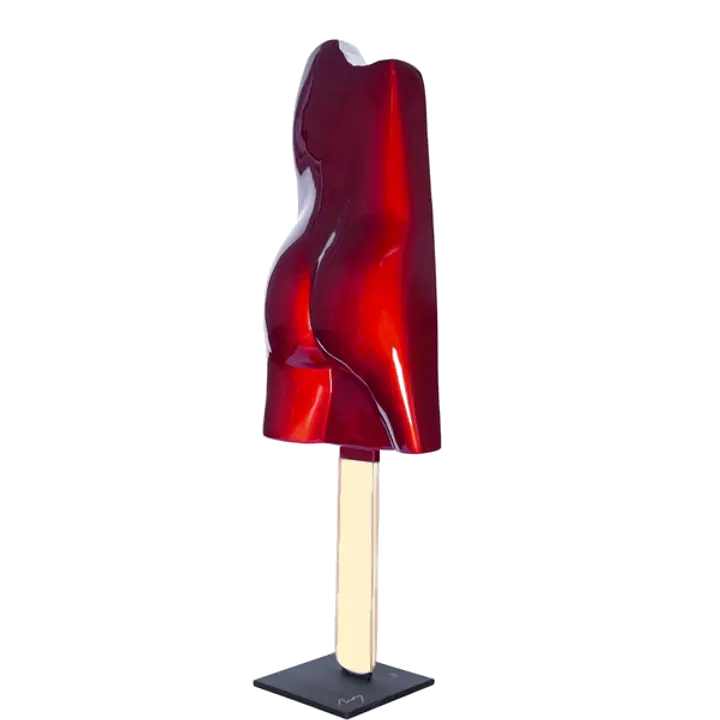
This article discusses paint drips on sculptures . Often, and incorrectly, labeled "pop art," they represent a controversial phenomenon in the contemporary art world. According to some art enthusiasts, current "pop art" primarily consists of intentionally applying paint drips to sculptural works. This trend is frequently associated with a playful and colorful aesthetic . However, the misuse of this term raises questions about the true understanding of the pop art movement and the artistic depth of these practices.
Where did this movement called pop art come from?
Pop art, a key reference for any sculpteur contemporain français exploring popular culture and visual symbols, emerged in the 1950s and 60s as a reaction against the elitism of abstract art. It was defined by the appropriation of imagery from everyday life — advertising, media, consumer goods — transforming them into powerful artistic statements.
Artists such as Andy Warhol deliberately blurred the boundaries between "high" art and mass-produced objects, questioning artistic value in a consumer-driven society. Roy Lichtenstein and Claes Oldenburg also shaped the movement, each contributing to its visual language rooted in comic strips, branding, and industrial forms.
Far from being merely decorative, pop art functioned as a critical mirror of consumer society, often infused with irony and provocation. This critical dimension remains central today, particularly for the sculpteur contemporain français who reinterprets familiar objects, symbols, and cultural codes to challenge perception and provoke reflection.
To better understand how this critical logic manifests itself today.

We are easily satisfied these days
a reality that any sculpteur contemporain français must confront when addressing popular imagery and visual culture.
The drips on sculptures, however, often seem disconnected from any real critical intent. Reduced to a superficial visual effect, they reveal artists with little to say. While this aesthetic loosely echoes abstract expressionist techniques seen in painters like Andy Warhol’s predecessors or Jackson Pollock, its contemporary use frequently lacks depth or purpose.
Contemporary resin sculpture, dripping dog “pop art” — spot the mistake. If that’s today’s pop art, I must be the Bishop of Chartres.
Here, the approach leans more toward trend and immediate visual impact than artistic reflection. It targets an audience unfamiliar with art history, prioritizing effect over meaning. This can be described as a form of decorative “Pop Art,” often lacking both conceptual strength and true aesthetic coherence.
These painted sculptures align more with an “Instagrammable” aesthetic, where image dominates substance. Worse, I have encountered “gallery owners” — often disengaged and lacking any real knowledge of art — who label this kind of work as “Pop Art,” further diluting the meaning of the movement.
Bright colors and fluid textures create instantly recognizable visuals, but risk reducing the artwork to mere decoration, stripped of critical substance. For a sculpteur contemporain français, this raises a fundamental question: should art simply please, or should it challenge, question, and endure?
To see an example of a thoughtful and critical artistic approach,

Everything's falling apart
Labeling these works as "pop art" is therefore an oversimplification. In some cases, it even becomes a commercial appropriation of a historical movement with far deeper meaning. For any sculpteur contemporain français, this shift raises critical questions about the integrity of artistic references.
Pop art originally aimed to question the relationship between art, mass culture, and production methods. Today, the widespread use of drips often serves only to enhance visual appeal. This form of "modernity" reflects the times, but without any real engagement with the social or political implications such gestures once carried.
We agree
Ultimately, drips on sculptures can be seen as a symptom of contemporary society. In a market driven by the commodification of art, they are simply easier to sell.
Artists and galleries increasingly favor immediately consumable works. This model attracts attention in exhibitions and on social media, but often lacks depth. While these works may have visual interest, their artistic and critical impact falls short of the ambitions of original pop art. For a sculpteur contemporain français, this reflects a broader issue: a growing gap between visibility and meaning.
Pop Art distorted by ignorance
This confusion surrounding pop art reveals a lack of artistic culture among certain audiences. Many judge based solely on visual impact, ignoring the critical and social foundations that defined the movement’s pioneers.
The result is a superficial consumption of art, where color and drip effects replace reflection and message. A sculpteur contemporain français committed to a meaningful approach must therefore reintroduce depth, context, and intention into contemporary creation.
The psychological effect on the public
Faced with these "Pop Art of Decor" works, the uninitiated viewer may experience immediate excitement , but also intellectual confusion . The impression of encountering politically engaged or modern art is present, but a true understanding of its meaning is absent . This disconnect creates an artificial admiration , a mixture of visual pleasure and bewilderment, sometimes amplified by social media and the Instagram phenomenon.
Why original Pop Art remains relevant
Despite these distortions, original pop art retains its full power. It reminds us that art can question society, critique consumerism, and explore the boundaries between object and artwork.
For a sculpteur contemporain français, understanding this distinction is essential. It allows a return to a more demanding artistic approach, where intention, message, and cultural awareness take precedence over simple visual effect.
Recognizing this difference helps to revalue authentic pop art and avoid confusing superficial aesthetics with a truly conceptual and critical practice.
Understanding before choosing
By understanding what defines true pop art and the intention behind each work, you are better equipped to make informed choices.
Whether you are a collector, an art enthusiast, or simply curious, developing this awareness allows you to distinguish between decorative trends and meaningful contemporary creation — a distinction that remains central for any sculpteur contemporain français committed to a strong artistic vision.
Discover contemporary sculpture beyond trends
If you are looking to go beyond decorative trends and discover the work of a committed sculpteur contemporain français, explore a selection of original creations on the artist’s official website.
Learn more:


Comments